
easyRESCUE-PRO3 (A04003)
AIS + DSC & HOMING
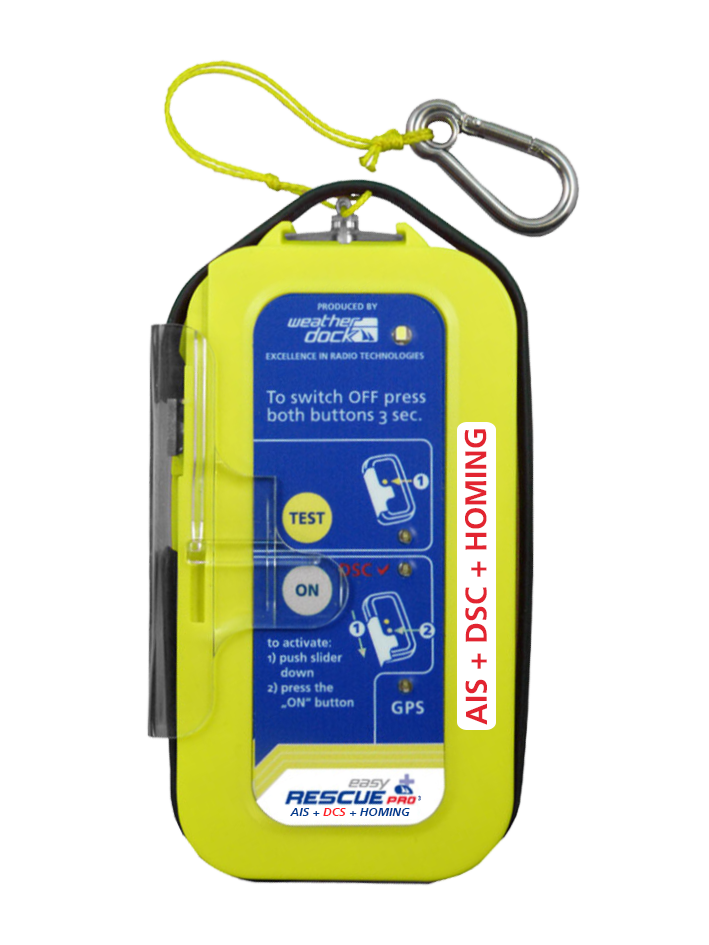
3-way alerting and location functionality
The easyRESCUE-PRO3 combines the 3 most effective alerting and
locating systems, AIS, DSC and 121.5MHz homing, in one unit.
 |
| 
- Automatic activation upon full water contact
- SOLAS approval
- Simple operation via Bluetooth® and intuitive app
Important Information - Product Recall
Important information about the easyRESCUE with a production date from October to November 2022.
Click here to learn more >
Product variants
A04003 easyRESCUE-PRO 3
AIS MOB – DSC distress call and 121.5 MHz homing signal to fasten up rescue missions at sea
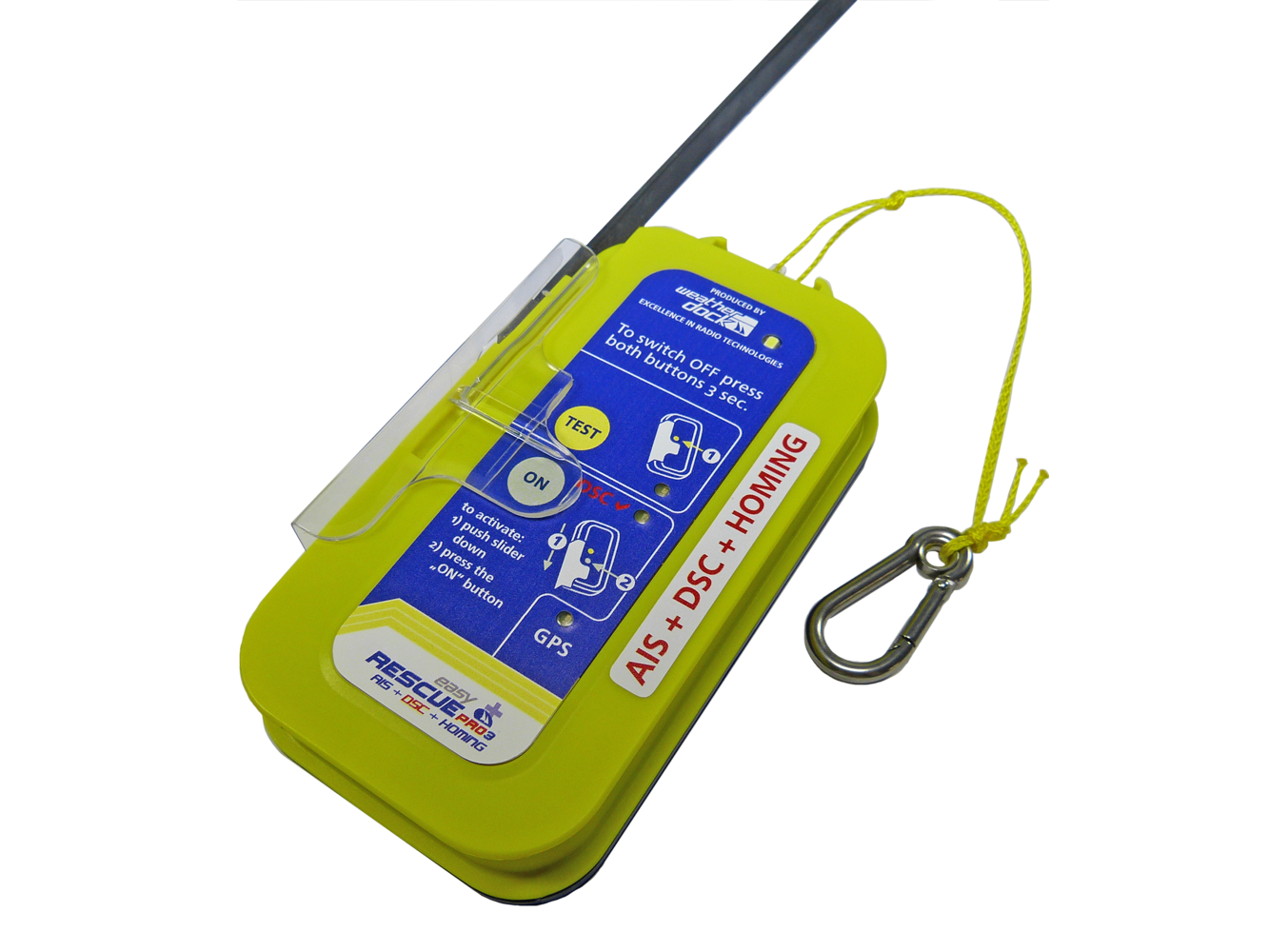
Product photos

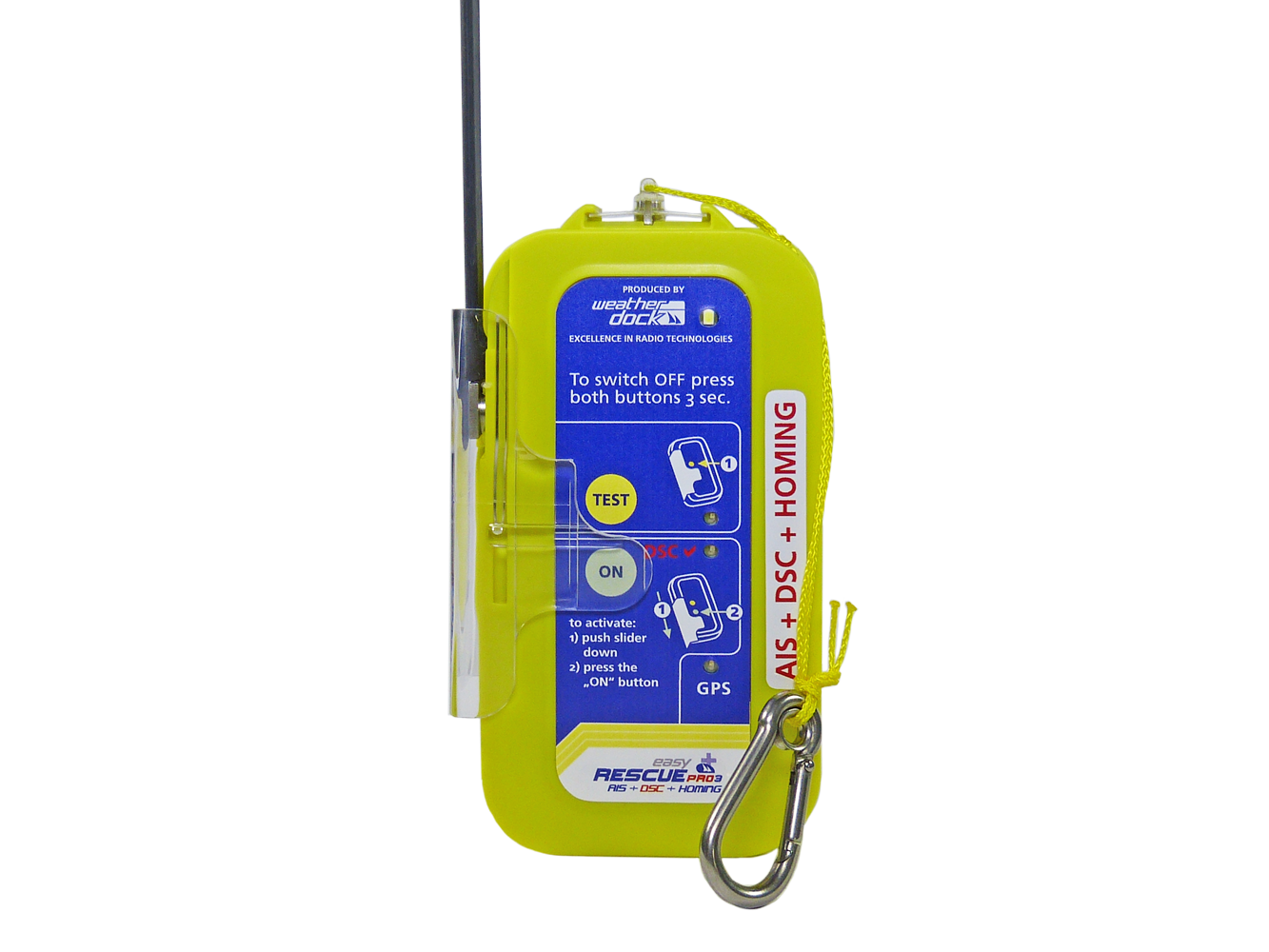
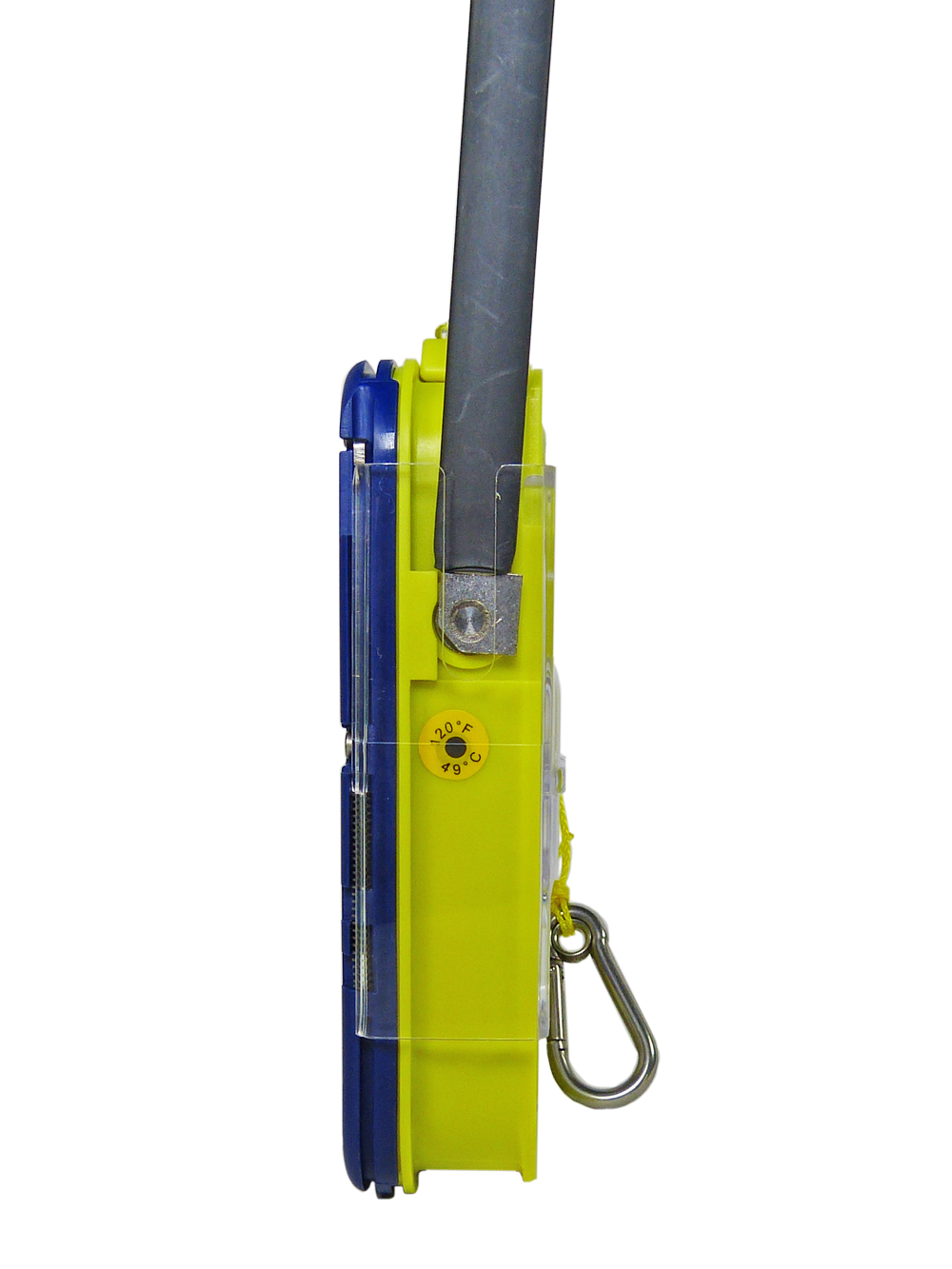
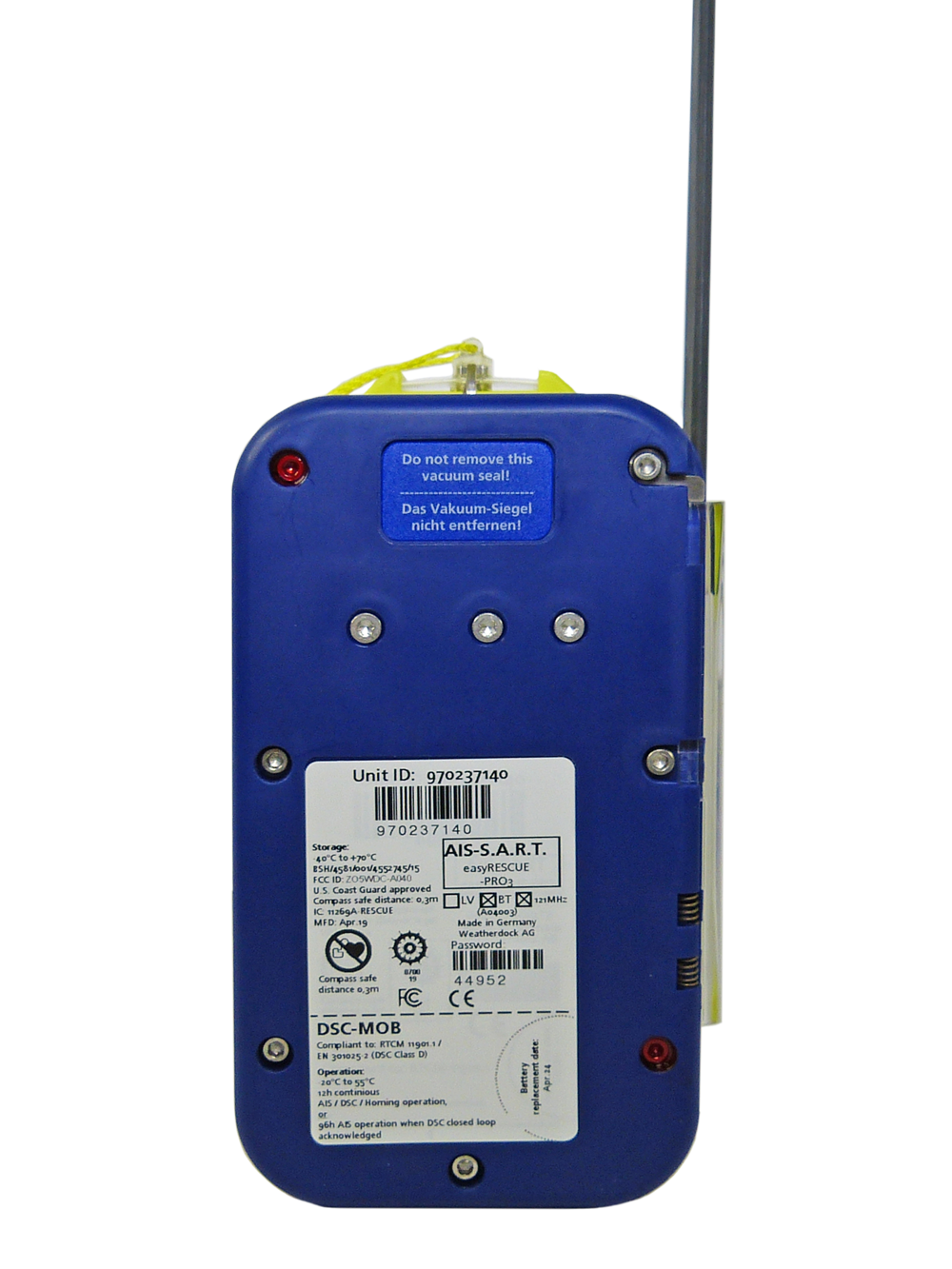
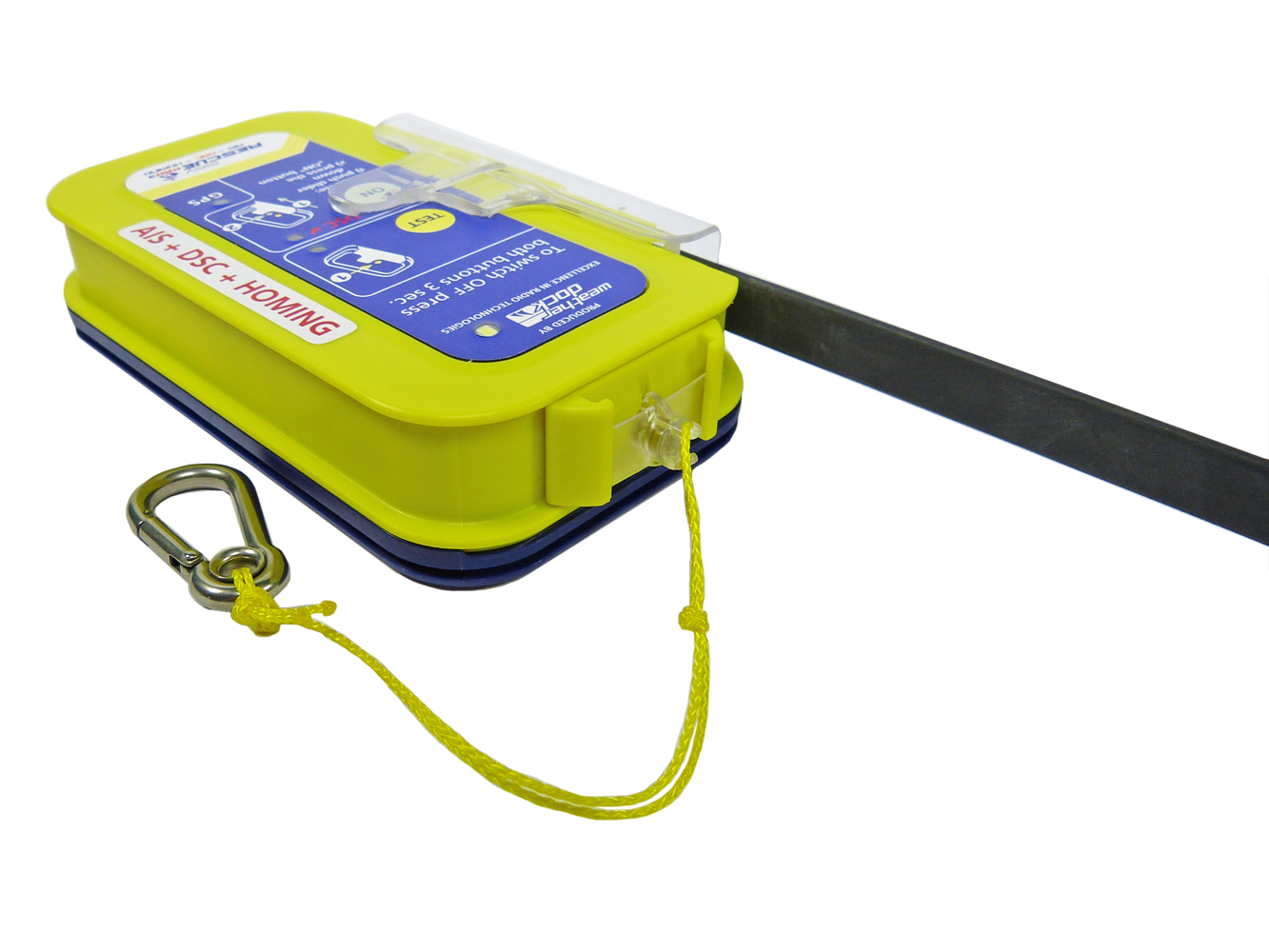

Product information
Function
The easyRESCUE-PRO3 emergency beacon features AIS, DSC, and 121.5 MHz homing, and when activated, simultaneously triggers an alert in the AIS system as well as in the DSC GMDSS distress system. At the same time, it transmits a signal that can be located. For your personal safety, you can take full advantage of these technologies in a single device. Because in an emergency, every second counts!
The easyRESCUE-PRO3 emergency beacon features an integrated Bluetooth LE module. This allows for quick and easy programming of up to 8 different MMSI numbers into the beacon. The easyRESCUE-PRO3 is a further development of the easyRESCUE (AIS S.A.R.T.), which is approved for maritime search and rescue and SOLAS-certified, and is available as both an AIS SART and an AIS MOB Class M (with the respective standard-compliant certification). The easyRESCUE-PRO3 also features the following alerting technologies: DSC “distress call” (MOB) and a locatable distress signal transmitted on 121.5 MHz.
Thanks to the DSC functionality used, even vessels equipped with only a DSC controller can receive a distress signal from a person in distress and determine their current position. This significantly increases the number of potential rescuers for a “man overboard” victim and, of course, improves their chances of survival.
After activation, the device transmits an AIS message, which can be received by all AIS devices (Class A and Class B) within a range of up to 10 or more nautical miles (depending on the height of the receiving antenna). Prior to this, a DSC “distress call” is transmitted, but initially in a so-called “closed loop” to the vessel itself. The transmission range of the DSC is similar to that of AIS. If the vessel itself acknowledges the received DSC distress call, the easyRESCUE-PRO will cease DSC transmissions. However, if no acknowledgment is received from the vessel within 10 (5) minutes, the system switches to the so-called “DSC open loop” (all-ships call). Here, DSC devices within transmission range can receive this “distress call,” acknowledge it, or, depending on the device class, relay it to other vessels or to a coastal radio station. In this way, even a distant rescue organization (MRCC) can be notified. At the same time, the AIS position report is continuously transmitted until the device is turned off.
In addition to displaying the exact distress location on the AIS chartplotter or PC screen, the exact coordinates are also shown on the DSC controller.
When used with a compatible automatic life jacket (which must have an internal pocket for the easyRESCUE), this device is the perfect solution. In addition to water activation, the easyRESCUE-PRO features another automatic trigger function: via a pull cord and magnetic switch. Pulling the cord to trigger the device can, for example, occur automatically in conjunction with self-inflating life-saving equipment. Of course, in addition to these automatic triggers, manual triggering is still included in the range of functions.
The easyRESCUE (AIS S.A.R.T.) is certified by the BSH (Federal Maritime and Hydrographic Agency), in accordance with international regulations for commercial shipping (SOLAS), by the U.S. Federal Communications Commission (FCC), and by the United States Coast Guard. With these certifications, the easyRESCUE is unique worldwide as an AIS S.A.R.T. in this design. The DSC transmitter and receiver included in the easyRESCUE-PRO complies with standard EN 301 025 (Class D) and meets RTCM 11901.1.
AIS
As soon as the easyRESCUE-PRO has GPS position data, it transmits a globally standardized emergency message that can be received by any AIS receiver within range. In addition to the current GPS position, this emergency message also includes the device’s unique identification number as well as information on course and speed over ground. This makes it clear to everyone where the person in distress is currently located and in which direction they are being carried by the current at what speed. The AIS emergency message is retransmitted every minute with an updated position. The received data is converted by the AIS receiver so that it can be displayed accordingly on a chartplotter or PC screen.
DSC GDMSS
Immediately after activation, the easyRESCUE-PRO transmits a DSC distress call. This call does not yet include a position report, but only the transmitter’s unique device identification number. As a first step in the alerting process, this is already very helpful. As soon as a GPS fix is available, the DSC distress call is transmitted again.
closed loop
Initially, the easyRESCUE-PRO operates in “closed loop” mode. This means that the distress call is sent only to MMSI numbers that have been pre-programmed into the device. Up to 8 different MMSI numbers can be programmed into the easyRESCUE-PRO’s internal memory for “closed loop” alerting. This can be particularly helpful when traveling in a convoy of ships. On board these up to 8 ships, a confirmation of the distress call can now be sent within the next 10 minutes. When such a confirmation is received, the easyRESCUE-PRO detects it, and an audio signal sounds. Afterward, the emergency transmitter automatically deactivates the DSC function to keep this radio channel clear. However, the AIS transmission continues to all receivers within range.
open loop
If no confirmation is received from any of the up to 8 vessels’ MMSIs within the 10-minute window, the easyRESCUE-PRO automatically switches to the so-called “open loop” . This means that a general “all ships call” is now transmitted via DSC. Now, other vessels outside the group of 8 can also receive the distress call. Commercial vessels have the capability to relay the distress call using their radio equipment. In this way, the DSC “distress call” from a person in distress can be relayed over many hundreds of nautical miles to a rescue center on the coast. The acknowledgment follows the same path back, and an audio signal is also emitted by the device. Afterward, the easyRESCUE-PRO deactivates the DSC function to keep the radio channel clear.
Important!
In accordance with all currently applicable regulations, a DSC distress transmitter may only be operated in Germany if it is equipped with a built-in DSC Class B receiver. This is necessary so that the DSC function can be deactivated after the confirmation has been received. Otherwise, in an “open loop” configuration, this would cause massive interference with radio communications within the GMDSS rescue chain. Because the distress beacon continues to transmit without a receiver, it blocks the channel.
121.5 MHz homing signal
Rescue organizations or other institutions that use 121.5 MHz homing technology can use the transmitted distress signal to locate the person in the water or determine the course to that location.
Bluetooth
The easyRESCUE-PRO(BT) and easyRESCUE-PRO3 emergency transmitters feature an integrated Bluetooth LE module. This enables quick and easy programming of up to 8 different MMSI numbers into the emergency transmitter. These settings can be configured using the dedicated Weatherdock app, which is available free of charge for both Apple iOS and Android.
Highlights
easyRESCUE App
With the easyRESCUE app, up to 8 different MMSI numbers can be pre-programmed in the rescue transmitter via Bluetooth.


Technische Daten
Approval
Our easyRESCUE Rescue Transmitters have a basic approval and do not have to be registered anymore!
Product Comparison
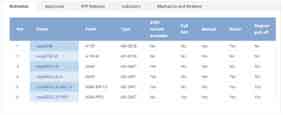
FUNCTIONAL OVERVIEW OF OUR RESCUE TRANSMITTERS
FAQ
You will find answers here!
To frequently asked questions.
What is the easyRESCUE-PRO 3 and what is it used for?
The easyRESCUE-PRO 3 is an AIS-SART emergency transmitter with AIS, DSC, and 121.5 MHz homing functionality. It provides reliable multi-frequency alerting for quickly and effectively locating and rescuing people in the water.
Which alarm and tracking systems are activated simultaneously on the easyRESCUE-PRO3?
AIS, for position transmission to all AIS receivers within range.
DSC, initially in a closed loop (up to 8 pre-programmed MMSIs), then system-wide (“open loop”) via GMDSS if no acknowledgement is received.
121.5 MHz homing, for bearing signals from SAR units.
Why choose the easyRESCUE-PRO 3 instead of a PLB?
No MMSI binding like PLBs – flexible deployment on different vessels.
Higher performance than typical MOBs – with AIS SART approval, better availability for rescue teams.
Especially important in the North and Baltic Seas: Homing on 121.5 MHz helps, as older SAR helicopters don’t use AIS.
How easy is it to program the easyRESCUE-PRO3?
Thanks to the integrated Bluetooth interface, you can program the transmitter in just a few seconds using the free Weatherdock app (iOS/Android). MMSI numbers can be easily entered via smartphone or tablet – no cables, no special devices, and no prior technical knowledge required.
Downloads